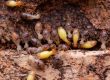

Drywood termites do have the ability to fly during one specific point in their life cycle. Winged drywood termites are referred to as swarmers or alates. Their job is to fly out of the colony and create new ones.
What To Know About Drywood Termites
Drywood termites do not need contact to the ground in order to flourish. They are known to wander up to a mile to locate a home and will develop a colony anywhere they can find a preferable source of wood.
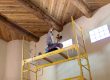
These termites require less moisture than either dampwood or subterranean termites to thrive and can usually be located in attics in which they infest the structural wood. Other items they could infest comprises of dying or dead shrubs and trees, electricity poles, furniture, and fences.
- Size: 3/8-1 inch.
- Color: Pale brown, dark brown, or yellowish tan.
- Body Shape: Distinct head, thorax, and abdomen with a dark exoskeleton.
- Wings: Equal in size, shortly shed after swarming.
Can Drywood Termites Fly?
As mentioned above, winged drywood termites, also called swarmers, have the ability to fly. They will leave a mature colony to fly out and start a brand new colony.
These pests are reddish-brown with two pairs of wings extending past their bodies. They measure about a half an inch long.
Drywood termites fly during daytime hours in both the summer and fall months. They are quite weak flyers, relying mainly on wind currents to propel them forward. Once they have landed, they are quick to discard their wings.
Differences Between Drywood And Subterranean Termites
All termites have a reputation for destroying man-made wooden structures. However, not all types are created equal or cause the same amount of damage. Let’s look at some differences between subterranean and drywood termites.
Damage
When taking into account annual damage in the U.S., subterranean termites are the most destructive type. The speed of the damage will also differ between the two types of pests. Subterranean termites will create damage much quicker due to their larger sized colonies.
Colony Size
The average subterranean termite colony is much larger than a drywood termite colony. Subterranean termites typically have colonies in the hundreds of thousands. A species known as the Formosan subterranean termite can have colonies with as many as 2 million pests.
Evidence
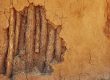
Drywood termites will leave tiny holes and droppings outside of wooden structures they’ve invaded. The droppings look like a mix of coffee grounds and pepper. Subterranean termites, meanwhile, will create mud tubes on foundation walls. They create these tubes to travel from the ground to the wood of a structure.
Damage
Subterranean termites are considered more destructive than drywood termites. This is because they have larger colony sizes and the ability to reproduce and spread quickly throughout a structure.
Since subterranean termites nest underground, they are able to invade homes in large numbers. Plus, they often go completely unnoticed until significant damage occurs.
Drywood termites will also threaten wooden structures, but their slower colony growth will result in less damage overall. Regardless, homeowners should take immediate action whenever termite damage is visible.
What Do Flying Drywood Termites Indicate?
Unfortunately, when homeowners discover drywood termites and/or their discarded wings, it means there is an established mature colony nearby.
In most cases, these pests can be found living in wall framing, eaves, or attics.
Termite Control Phoenix Metro Area
Poor Boy Termite Control can solve all of you termite issues. We only deal with termites as the name implies. We use thermal imaging, with no drilling or guessing. At Poor Boy Termite Control we detect termites and treat them. If you have a termite infestation, Call Poor Boy Termite Control at (480) 994-4240 and schedule an appointment before the problem gets worse!