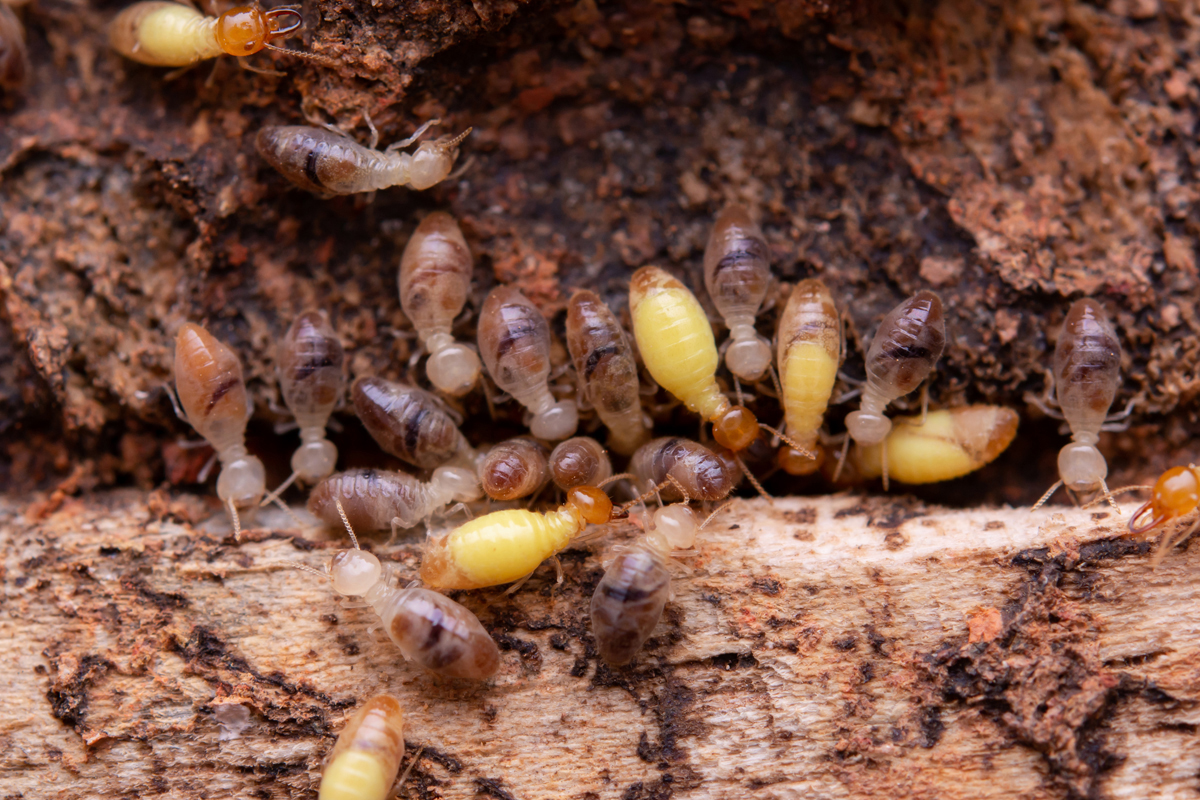
Termites can cause severe damage to homes and commercial properties, resulting in large repair costs that are not typically covered by standard insurance policies. Let’s look at types of termite damage and how the professionals can repair these issues.
How To Identify Termite Damage
Here are a few common indications of termite activity/damage:
- Sudden appearance of water damage.
- Buckling walls or ceilings.
- Mud tunnels in the home’s foundation.
- Maze-like designs located in wooden structures.
- Visible termite swarming.
Typically, all of these signs mean there is some termite activity going on in your home or commercial property. Advanced termite damage can greatly impact your home’s structural integrity. This includes severe cases of ceilings or floors collapsing.
However, if the damage does not affect the structure of the home, you could still be impacted by damaged walls, flooring, furniture, or carpeting. Immediate action should be taken whenever termite damage is noticed, regardless of how small the problem may appear.
Can Termite Damage Be Repaired?
While uncommon, certain termite species possess the capacity to render a residence irreparable, particularly when infestations remain unaddressed for extended periods. The Formosan termite stands as the most destructive termite species currently present in the United States. A mature Formosan colony can inflict substantial structural damage within approximately two years if left untreated.
Alternatively, other termite species require considerably longer timeframes to produce equivalent damage levels. Notably, certain drywood termite colonies may require up to twenty years to cause severe structural compromise to a residence. Complete structural destruction by termites prior to detection remains uncommon. As colonies mature and expand, indicators of termite activity typically become increasingly apparent.
How To Fix Termite Damage
There are two common methods used to fix termite damage to wood, including:
- Completely replace the damaged wood sections.
- Add support adjacent to the damaged wood.
In the majority of cases, adding a wood support to the wall will be easier and less expensive, overall. This repair type works for numerous structural and non-structural damages.
Repairs involving replacing structural supports are typically the most complicated type. It is crucial for adequate support to be provided during these repairs.
Who Pays For Termite Damage Repair?
In Arizona, this responsibility customarily falls upon the property seller, consistent with practices throughout most jurisdictions nationwide. Should termite damage—whether from current or historical activity—be identified in an Arizona property, the seller assumes financial responsibility for pest control interventions.
The seller possesses multiple options for managing termite and pest control expenditures. They may elect to finance treatment costs upfront and correspondingly reduce the home’s sale price, alternatively arranging payment through closing expenses.
Following certification that the residence is pest-free and upon the buyer’s acquisition of the property, the buyer assumes all subsequent responsibility for pest and termite management. Significantly, homeowners’ insurance policies do not provide coverage for termite damage restoration; consequently, conducting a comprehensive inspection prior to closing is essential.
Conclusion
The good news is structural failure can be prevented or minimized with annual termite inspections and treatments. Termite inspections can provide homeowners with details that may make their home more susceptible to termite activity.
Help prevent possible infestations by contacting the team at Poor Boy Termite Control for more information today!
Termite Control Phoenix Metro Area
Poor Boy Termite Control can solve all of you termite issues. We only deal with termites as the name implies. We use thermal imaging, with no drilling or guessing. At Poor Boy Termite Control we detect termites and treat them. If you have a termite infestation, Call Poor Boy Termite Control at (480) 994-4240 and schedule an appointment before the problem gets worse!