Discovering termite activity around a property can be every homeowner’s worst nightmare. These pests can wreak havoc on a home’s structure and foundation. Let’s take a look at what their nests look like and how you’ll be able to spot their presence.
What Do Termite Nests Look Like?
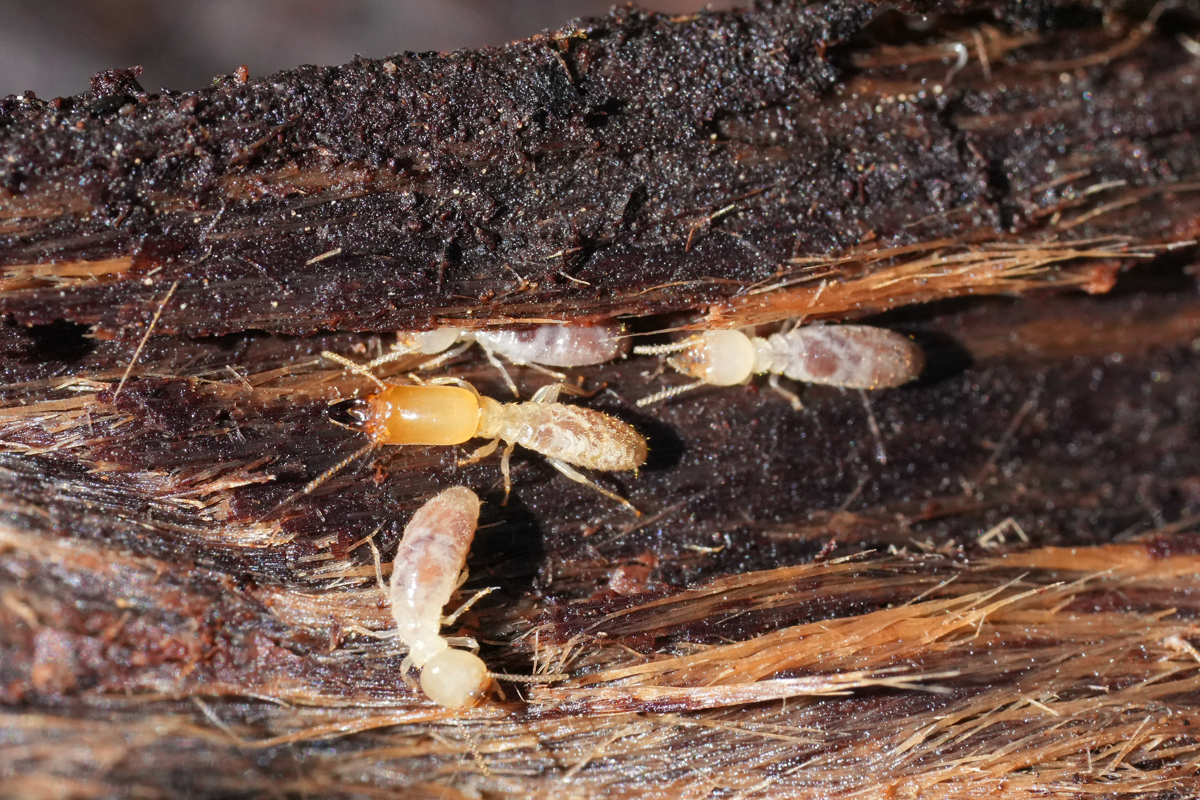
Also known as termite mounds, termite colonies, are created by the pests themselves. The appearance of the nest can vary based on the type of termite species and their survival needs. For example, subterranean termites, are the most common species and they will build their nests underground. They will create mud tubes to avoid air exposure in order to navigate around the nest and find food. Homeowners often describe these nests as cracks filled with mud.
Drywood termites live in walls, attics, or floors. They do not require much moisture for survival. You can typically locate their nests around furniture, door frames, or structural beams. These nests look like intricate inlays found within wood surfaces.
Another common termite species is the dampwood termite. As the name suggests, these termites look for areas featuring a lot of moisture. These pests are often found in either attics or basements. Their nests look quite similar to those of drywood termites, as they prefer to live in rotting wooden areas.
Other Signs Of Termite Activity
Below are some signs of termite damage that might indicate an infestation in your home.
Tiny Pinholes
Termites create minute pinholes as a means to exit walls and move away from their colonies. They could also make gaps for entering the walls or maneuver around your house. Tiny pin holes found in drywall are typically a good indication of a termite invasion. Many termites are going to fill in the holes to safeguard their colony inside, but this is not always so. These indentations are one of a few onset signs of termites in your drywall.
Mud Tubes
When termites dig underground, they produce mud tubes or tunnels. These tunnels tend to be about as wide as a pencil. When you have a termite invasion, you are going to notice mud tubes around your home’s foundation. Don’t forget, nevertheless, that mud tubes are going to last a long time out in your yard, so they aren’t inevitably an indicator of an active termite invasion. You can take off the top of these tubes and check them each day to see if you notice any termites.
Wall Paint Is Flaking Or Bubbling
There are tons of reasons your paint might flake off or bubble, and a termite invasion can surely be one of them. Wall termites require moisture to thrive, so as they get inside the interior of your walls, they are going to bring some moisture with them. That moisture could react with your painted drywall surfaces, causing flaking, bubbles, cracks, or peeling.
Walls Sound Hollow
If you think termites could be inside your walls, lightly tap on the surface where they could be. If you notice a hollow sound, there is a slight chance termites have eaten away at the walls inside wood framing. Compare the sounds on various walls to make sure the hollow noise is distinctive. If the termite damage is considerable, the wall might also crumble inside as you tap on it.
Dust Collecting At Wall Floors
Seeing dust collecting on top of baseboards, or where your walls meet the floor, may not be a noticeable sign of termites. Look and see if the dust is darkish in color, somewhat like black pepper—this might be termite dust. This dust is a mixture of wall dirt, wooden shavings, and termite excrement, and it is going to fall and collect on the floor as termite holes in the walls emerge.
Wood Trim Is Damaged
Termites feast on wood across your home. This is most often noticeable on wooden trim and paneling. Look at any of the wood pieces around your home for minute lines that might indicate termite tunnels. There is going to usually be many lines in different directions, comparable to a maze.
Foundation Has Moved
Should termites be in your house for an extended period, they can cause considerable damage. This damage could make your home move or settle in reaction to being eaten away. Indicators of structural damage in a home includes drywall cracks above doors and windows and doors and windows that don’t close correctly.
Conclusion
Always be mindful that the absence of visible termite activity does not mean an infestation is not occurring. These pests can live underground and travel quite far without ever being heard or seen. Recognizing the signs above can help prevent any further termite damage to your home.
Termite Control Phoenix Metro Area
Poor Boy Termite Control can solve all of you termite issues. We only deal with termites as the name implies. We use thermal imaging, with no drilling or guessing. At Poor Boy Termite Control we detect termites and treat them. If you have a termite infestation, Call Poor Boy Termite Control at (480) 994-4240 and schedule an appointment before the problem gets worse!